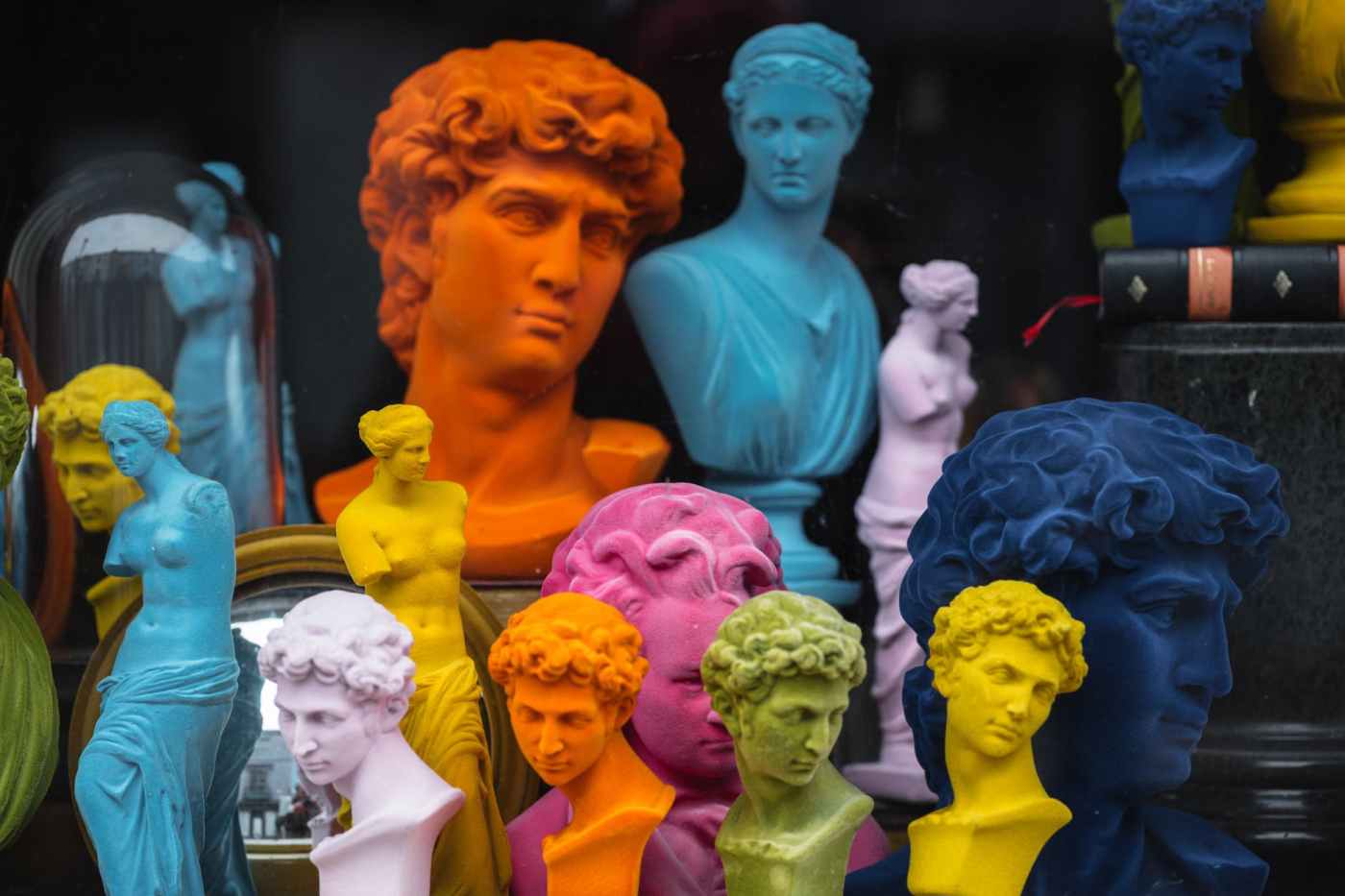
This week within the MA, we have been encouraged to look at genre-bending or blending. Using existing work; breaking it up, rewriting it and considering it from all angles. As I work through this week’s reading and writing activities, I find one question rises to the top over again.
What genre do I write in?
The word itself, derived from the Latin genus and the Ancient Greek génos means origin or group is a somewhat slippery fellow. There are fictional genres – romance, historical, crime, fantasy, thriller and horror as examples. These all have recognisable tropes that give the reader comfort and the recommendation algorithms something to work with. But we also classify stories for children, YA and adults only.
To make matters worse, fiction itself is a genre. Poetry, prose, memoir, travelogue and, the trickiest of all, creative nonfiction all vie for attention on our shelves, our phones and our e-readers. Authors increasingly experiment with different styles, layering their work with poetry, script notes, technical references, recipes and such like all to give the reader something else to engage with as if the story, told in its simplest form is sometimes not enough. We see digital extension of fictional worlds, video games from novels and vice-versa; true crime podcasts, immersive art, sensory experiences and deconstructed stories that appear as art themselves as increasing hybridity blurs the lines between genres and creates new opportunities for expression.
But how does any of that help a new author when they are trying to categorise their work so that an agent/publisher knows where to put? And in the age of digital mashups, does it really matter anymore?
The road to genre-blending is not an easy one. To make it work, the author needs to know when to bend the rules and when to break them completely. I don’t think you can take a recipe and turn it into an effective poem without knowing how to write poetry first. I feel there has to be enough of each of the foundational genres to make it work and everything has to be stylistically consistent.
Film makers do this well. Relying on the audience’s inherent knowledge of something else to make the points in their film work effectively. From Kill Bill, vol 1 & 2, to ZombieLand, we see echoes of other genres wrapped into the costume, dialogue and cinematic styling. These are in part homage but also serve to provide the new story with a different, often shared, history. The familiar tropes of a western wrapped into a post- apocalyptic survival story give the audience comfort.
Within literature these hybrids can give rise to something startling and new. The first time I read Cloud Atlas (Mitchell, 2004) I hated it. Overly complex (and long) the time-shifts and fragmented structure made it a hard read. But since then, having read similar novels where authors have attempted similar things, I have come to appreciate his ambition and skill. The rise of creative nonfiction has also smudged the lines between what needs to be true and what can be created; I freely admit that the diversion into this genre in the first year of the MA was challenging but ultimately enjoyable.
Anyway, back to the original question. Do I know what genre I write in?
Ahh… in a word – No.
And therein is my problem. In thinking about where I would find my imaginary finished book in an equally imaginary bookshop, I don’t know that there’s a shelf for ‘sci-fi-comedy-crime-romance’ and so it occurs to me that I have to pick a side. I need to make it clearer, even if only for myself, before I start blurring the lines.
Wish me luck!
 The Curious Wordsmith
Leave a comment